Creators
Great buildings are made by extraordinary people. Here are the ones who turned an impossible idea into twin towers that touch the sky.
A Cast of Characters
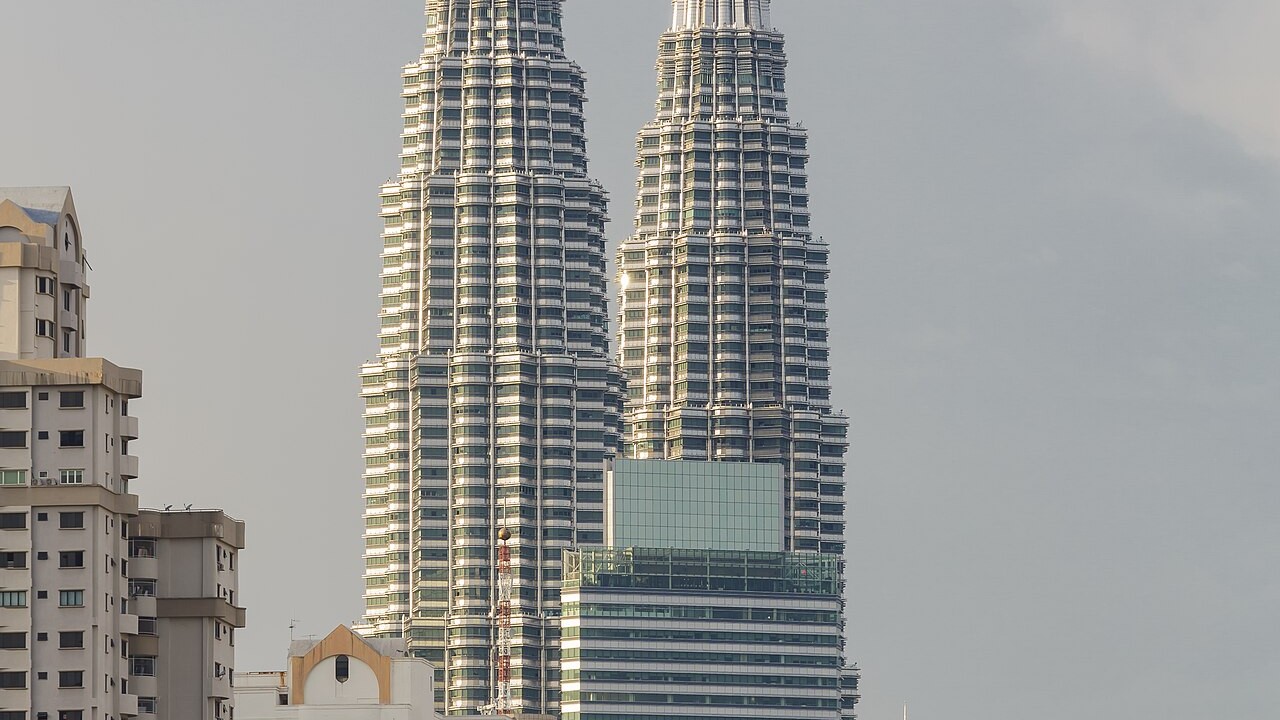
Building the world\'s tallest towers required bringing together people who had never worked together and asking them to do things nobody had done before. A Malaysian prime minister, an Argentine architect, an American structural engineer, a Brazilian landscape designer, and construction teams from Japan and Korea — this was not a project for people who preferred the familiar. The Petronas Twin Towers were built by people who thrived on challenge, disagreement, and the sheer audacity of creating something the world said couldn\'t be done.
Key Figures
The individuals whose vision and effort gave the world its most famous twin towers.
Mahathir Mohamad
The Catalyst
As Prime Minister, Mahathir didn't just approve the towers — he willed them into existence. His Vision 2020 programme demanded a landmark that would force the world to see Malaysia differently. He personally chaired the design competition, chose the winning entry, and defended the project through economic crisis and political criticism. Without his stubborn conviction that Malaysia deserved the tallest buildings on Earth, the Petronas Twin Towers would never have been built.
César Pelli
The Design Genius
An Argentine who became one of America's most celebrated architects, Pelli brought something no competitor matched: genuine cultural curiosity. He didn't impose a Western skyscraper form on Kuala Lumpur. Instead, he studied Islamic art until he found a geometric pattern — the eight-pointed star — that could become both a spiritual tribute and a structural foundation. He called the finished towers "the best thing I've ever done."
Charles Thornton
The Concrete Revolutionary
Most engineers in the 1990s would have insisted on a steel frame for a 450-metre tower. Thornton argued for concrete — and proved that it could be stronger, cheaper, and better at damping the wind-induced sway that makes occupants of tall buildings uncomfortable. His tube-in-tube structural system became the towers' hidden backbone, and his Skybridge bearing design solved a problem nobody had faced before.
Hijjas Kasturi
The Local Expert
As Malaysia's most prominent architect, Hijjas served as the critical link between international design ambition and local construction reality. He ensured the Islamic design motifs were authentic, not tokenistic, and navigated Malaysian building codes that had never contemplated structures of this scale. His own career has been dedicated to proving that tropical architecture can be both modern and culturally grounded.
Roberto Burle Marx
The Garden Visionary
Brazil's greatest landscape architect accepted the KLCC Park commission as one of his final projects before his death in 1994. His vision of recreating a tropical rainforest at the foot of the towers has matured over 25 years into exactly what he promised: a genuine urban wilderness of native species, water features, and winding paths that make you forget you're surrounded by one of Asia's densest cityscapes.
The Construction Workforce
7,000 Strong
Labourers from Malaysia, Indonesia, Bangladesh, India, Japan, and South Korea built the towers floor by floor, working through equatorial heat and monsoon rain at heights that would make most people dizzy. They operated cranes at 400 metres, poured concrete continuously for days, and installed 167,000 square metres of cladding panels. The towers are their monument, even if their names are not engraved on any plaque.